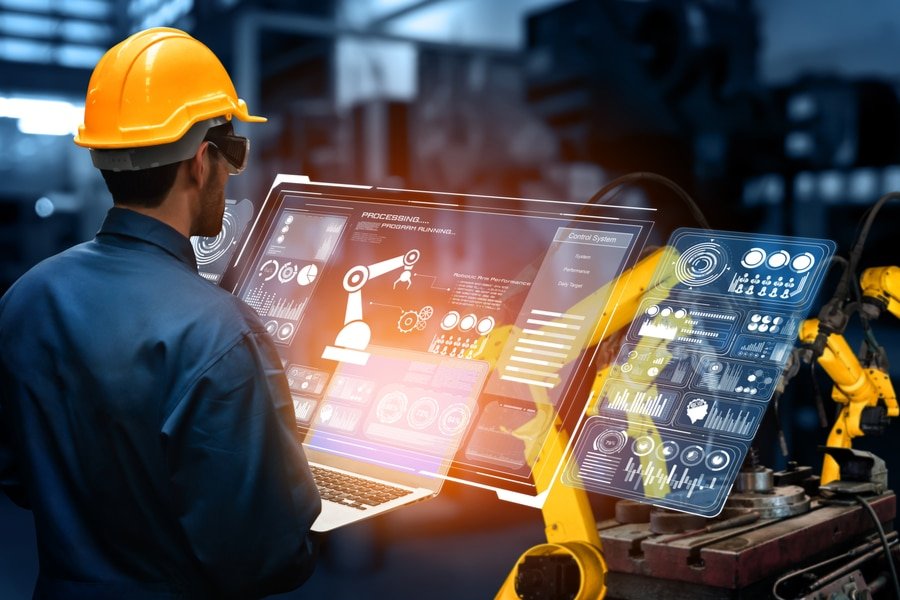
Industrial automation systems are transforming the way modern industries operate by improving efficiency, accuracy, and productivity. As businesses continue to adopt smart technologies, automation has become a key factor in staying competitive in today’s fast-paced industrial environment.
What is Industrial Automation?
Industrial automation refers to the use of control systems such as computers, PLCs (Programmable Logic Controllers), SCADA (Supervisory Control and Data Acquisition), and robotics to manage industrial processes with minimal human intervention. These systems are designed to handle repetitive tasks, monitor performance, and ensure consistent output quality.
Key Components of Industrial Automation Systems
An effective industrial automation system is made up of several important components:
- Sensors and Actuators: Sensors collect real-time data such as temperature, pressure, and motion, while actuators perform physical actions based on commands.
- Control Systems: PLCs and DCS (Distributed Control Systems) process input data and make decisions to control machinery and processes.
- Human-Machine Interface (HMI): HMIs allow operators to interact with the system, monitor performance, and make adjustments when necessary.
- Communication Networks: These ensure seamless data exchange between devices and systems.
Types of Industrial Automation
There are different types of automation systems used in industries:
- Fixed Automation: Used for high-volume production with minimal variation.
- Programmable Automation: Suitable for batch production where changes can be made through reprogramming.
- Flexible Automation: Allows quick adjustments for different products and processes.
- Integrated Automation: Combines all processes into a fully automated system.
Benefits of Industrial Automation
Industrial automation offers numerous advantages for businesses:
- Increased Productivity: Machines can operate continuously without fatigue, leading to higher output.
- Improved Accuracy: Automation reduces human errors and ensures consistent product quality.
- Cost Efficiency: Lower labor costs and optimized resource usage result in long-term savings.
- Enhanced Safety: Automation reduces the need for human involvement in hazardous environments.
- Real-Time Monitoring: Businesses can track performance and identify issues instantly.
Applications Across Industries
Industrial automation is widely used across various sectors, including manufacturing, oil and gas, pharmaceuticals, food processing, and energy. It plays a crucial role in streamlining operations, maintaining quality standards, and improving overall efficiency.
The Future of Industrial Automation
With the rise of Industry 4.0, industrial automation is evolving rapidly. Technologies such as IoT (Internet of Things), artificial intelligence, and machine learning are making systems smarter and more connected. These advancements enable predictive maintenance, data-driven decision-making, and greater operational flexibility.
Conclusion
Industrial automation systems are no longer a luxury but a necessity for modern industries. By adopting the right automation solutions, businesses can enhance productivity, reduce costs, and stay ahead in a competitive market. Investing in automation today means building a smarter and more efficient future.
